Sebago
Mariners' Museum, Uncurated Search Results
Type: Coast Guard Cutter
Year:
Builder:
Location:

These records are found in the online catalog of The Mariners’ Museum and Park in Newport News, Virginia. Uncurated search results are presented to give researchers and interested readers an idea of whether the museum’s archives contain information about this vessel and whether it may be worthwhile to visit the museum’s catalog search page for further investigation. Uncurated results may be inaccurate or incomplete.
Search mode: Exact Name. Search phrase(s): "Sebago". Results returned: 8. Results displayed in this table: 8.
Use these buttons to send uncurated search results to your own app or text document for further research. First, check the box for any row, or click "Select All" then uncheck any rows. Then click "Show Selections". You can then copy your selections from the text box and past them into your app.
| Fetch? | Row ID | Media | Date | Vessel | Place | Related Places | Inscription/Marks | Subject | Notes | Archive Number |
|---|---|---|---|---|---|---|---|---|---|---|
| 1 | 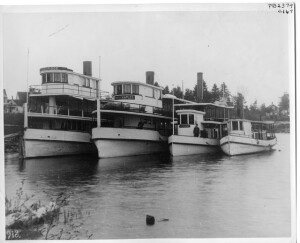 | Port bow quarter view showing four Lake Sebago steamers tied alongside side: GOODRIDGE, BAY OF NAPLES, SONGO, WORRAMBUS. See Steamboat Bill of Facts, Deceber 1949. page 77-80. | P0001.003/01-#PB2379 | |||||||
| 2 | No image URL. | Three parts : canal boat days 1830-1870 (Cumberland-Oxford Canal), steam navigation 1847-1932 (famous Songo River Line), motor boats. | LB84254 | |||||||
| 3 | No image URL. | Amphitrite (Ironclad : 1895).; Dixie (Steamship : 1898).; Monongahela (Sloop); New York Naval Shipyard.; Norfolk Navy Yard (U.S.).; Olympia (Cruiser : No. 6).; Prairie (Auxiliary cruiser : 1899).; Scorpion (Gunboat); Sebago (Tugboat); United States. Navy–Supplies and stores.; Vixen (Yacht) | Guantánamo Bay (Cuba).; Hampton Roads (Va. : Harbor). | Shipping–Cuba | In the collections of the Mariners' Museum, Newport News, Va. (#399) | LB32548 | ||||
| 4 | No image URL. | United States. Navy. South Atlantic Blockading Squadron (1861-1865).; Sebago (Side wheel gunboat : 1862).; Nantucket (Ironclad : 1863). | United States–History–Naval operations. Civil War, 1861-1865; Charleston (S.C.)–History–Siege, 1863.; Fort Wagner (S.C.). | Ordnance, Naval–United States.; Corporal punishment–United States.; Prizes (Property captured at sea). | The Journal records the activities and events of Commander Beaumont from the time he reported to Admiral Paulding on 15 October 1862 for passage on the Steamer Massachusetts to Port Royal to take command of the U.S.S. Sebago on blockade duty with the South Atlantic Blockading Squadron and continues with his service on the Passaic class monitor, Nantucket, through 18 November1863. The activities of the ship's commander common to the post are carefully recorded including ship movements, weather and changes of personnel and their duties. All the names of personnel assigned aboard or departing for other duty are recorded as well as all punishments and courts martial of individuals are also included detailing their crimes and rules infractions. The names of all other vessels contacted or observed are included. These include those supplying provisions, bringing prisoners, exchanging crew, etc. as well as those exchanging signals. Every signal given or received is recorded by code number. The portion of the Journal which records Commander Beaumont's service on the Nantucket gives important information about the blockade of Charleston, S.C. and the shelling of Fort Wagner in July 1863. The number and type of shells fired was carefully recorded. The Nantucket was hit twice, wounding two sailors. The September 1863 capture of a prize, the English Steamer Jupiter headed for Savannah by the U.S.S. Cimarron is detailed. | MS0409 | ||||
| 5 | 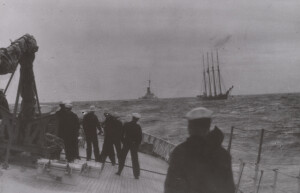 | Albert F. Paul (Schooner : 1917). | on verso: USCGC Sebago and USCGC George M. Bibb; view of ship in sistress near Hatteras, NC. Jan, 1938. | The Albert F. Paul is in the distance, as viewed from the deck of a US Coast Guard vessel. | P0001.011/01-#PK6710 | |||||
| 6 | No image URL. | SHORT DESCRIPTION: Two cylinder compound marine steam engine. INVENTORY: dolly - there is one (1) component part. | CL21965 | |||||||
| 7 | 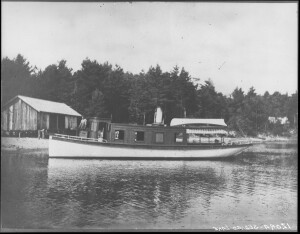 | 1883-1931 | "Izora", Sebago Lake, Maine | Steamboats–Maine.; Harbors–Maine. | Shows a port side view of a steamboat moored near shore. There is no record of a vessel Izora. This vessel's name has not been verified. | MS0091/03.02-02#1538 | ||||
| 8 | 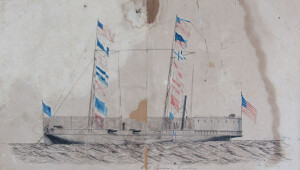 | SHORT DESCRIPTION: Pen and ink drawing highlighted with watercolor showing the USS Currituck, a US Navy gunboat in the Civil War. The ship is anchored and dressed with signal flags on both masts and there is a commissioning pennant flying on the aft mast. There is a small boat moored at the side of the ship. Netting surrounds the forward deck and there is wooden structure enclosing the stern. A funnel is mounted on the deck behind the aft mast. Section of a newspaper page is attached to the back of the mat. VESSEL INFORMATION- VESSEL NAME: SENECA (1843-1861); USS CURRITUCK (1862-1865); ARLINGTON (1865-1870) VESSEL TYPE: Wood hull, schooner rig SHIPBUILDER: William H. Brown SHIPBUILDER LOCATION: New York, New York BUILD DATE: 1843 SHIPOWNER: Dudley Buck & Company, Bucks Transportation Company DIMENSIONS: 120' x 23' x 7'6", 193 tons VESSEL HISTORY: Between 1843 and 1849 it was operated by the Bucks Transportation Company on a run between New York and Hartford with the ships Uncas and Sachem. The ship was sold to the United States Navy in 1861 for $10,000 and renamed Currituck. The Currituck was one of the escorts of the USS Monitor as she headed for Hampton Roads in March of 1862. 1862 March 4, 1862: Order of the commandant navy yard, New York, to Lieutenant Worden, U. S. Navy, commanding U.S.S. Monitor, to proceed with that vessel to Hampton Roads. NAVY YARD, NEW YORK, March 4, 1862. SIR: When the weather admits you will proceed with the Monitor under your command to Hampton Roads and on your arrival report to the senior naval officer there. I have hired the steamer James Freeborn to tow the Monitor, and have also directed the propellers Sachem and Currituck to attend on you to the mouth of the Chesapeake. If it should be necessary to retain them longer, you are authorized to do so. When you shall have no further occasion for the Freeborn, be pleased to give the captain a certificate with directions to return to New York, and immediately on his arrival report to me. Wishing you a safe and successful passage, I am, respectfully, your obedient servant, H. PAULDING, Commandant. ________________________________________ March 4, 1862: Order of the commandant navy yard, New York, to Acting Master Shankland, U. S. Navy, commanding U.S.S. Currituck, to convoy the U.S.S. Monitor to the mouth of the Chesapeake Bay. NAVY YARD, NEW YORK, March 4, 1862. SIR: You will, with the steamer Currituck under your command, proceed to sea tomorrow morning in company with the Monitor, and attend on her until you see her safely up to the mouth of the Chesapeake Bay. after doing so, continue on to Port Royal, in obedience to the orders of the Department. Respectfully, your obedient servant, H. PAULDING, Commodore. ________________________________________ March 6, 1862: Report of Lieutenant Worden, U.S. Navy, commanding U.S.S. Monitor, of the departure of that vessel from New York Harbor. U.S.S. Monitor, Off New York Harbor, March 6, 1862. SIR: By the pilot I have the honor to report that we passed the bar at 4 p.m., the U.S. steamers Currituck and Sachem and the steam tug Seth Low in company. The weather is favorable. In order to reach Hampton Roads as speedily as possible, whilst the fine weather lasts, I have been taken in tow by the tug. Respectfully, your obedient servant, John L. Worden, Lieutenant, Commanding. ________________________________________ May 4th, 1862: USS Currituck captures Confederate vessel Director. May 5th, 1862: USS Currituck captures Confederate vessel Water Witch. May 7th, 1862: USS Currituck captures Confederate vessels American Coaster and Planter in the Pamunkey River, Virginia. Acting Master William F. Shankland reported that some twenty schooners had been sunk and two gunboats burned by the Confederates above West Point. ________________________________________ May 17th, 1862: The USS Sebago and Currituck escort the troop transport Seth Low several miles down the Pamunkey River, Virginia, forcing Confederates to burn or scuttle 17 vessels to prevent capture. However, the river at this point becomes so narrow that the gunboats are obliged to run backward for several miles before turning their bows around. ________________________________________ September 5, 1862: Unnamed confederate schooner burned by the USS Currituck in Old Haven Creek. ________________________________________ December 4th, 1862: USS Currituck sent up the Rappahannock River with the Anacostia, Jacob Bell, and Coeur de Lion. ________________________________________ December 10th, 1862: Part of the navy’s Rappahannock squadron. USS Currituck under acting master T. J. Linnekin sailed up to an anchorage three miles below Port Conway. Confederate artillery ambushed him a mile below his destination at Brandywine Hill, Virginia. The ship returned fire. The ship was struck at 2:25 PM. Afterwards the wounded ship limped upstream to join the Yankee, Anacostia, Jacob Bell, and Teaser. At 3:00 the Confederates attacked the flotilla. The fighting continued for an hour and then the Confederates scored a hit on the Currituck, putting a Parrot shell through her starboard side twenty inches below the waterline. The hole was plugged and 35 minutes later the ship was hit by another Parrot shell aft of the main rigging. The round breached the fire room and exploded, wounding three men including forecastle captain John McClusky ________________________________________ Abstract log of the U. S. S. Anacostia, September 29, 1862, to April 6, 1863. December 10.—At 3 p. m. enemy opened fire on U. S. S. Currituck, coming up the river. At 3:15 the enemy opened fire upon the fleet. Responded immediately with 9-inch shell gun and 50-pound rifle. At 4:45 ceased firing, not having been struck. ________________________________________ December 11th, 1862: Sent to Washington with the bodies of Captain Samuel Simmons of the schooner Kadosh and Henry F. Smith of the Currituck. The ship was leaking badly. ________________________________________ December 16th, 1862: U.S. Steamer Currituck in the Navy Yard at Washington according to letter sent to Commodore Andrew A. Harwood, Commanding Potomac Flotilla by T. J. Linnekin, acting master comdg. ________________________________________ 1863 January 3rd, 1863: USS Currituck captures Confederate sloop Potter between the Potomac and Rappahannock Rivers. ________________________________________ January 12th, 1863: USS Currituck destroys a Confederate salt works at Dividing Creek, Virginia. ________________________________________ January 13th, 1863: USS Currituck captures Confederate schooner Hampton at Dividing Creek, Virginia. ________________________________________ January 25th, 1863: USS Currituck captures Confederate sloop Queen of the Fleet in Tapp’s Creek, Virginia. ________________________________________ May 14th, 1863: Armed boats from the USS Currituck seize the Confederate ship Ladies’ Delight off Urbanna, Virginia. ________________________________________ May 21st, 1863: The Confederate ship Emily is captured at the mouth of the Rappahannock River by the USS Currituck, Anacostia, and Satellite. ________________________________________ October 21st, 1863: USS Currituck captures Confederate steamer Three Brothers in the Rappahannock River, Virginia. ________________________________________ 1864 January 5, 1864: Still on the Rappahannock. ________________________________________ January 12, 1864: A naval squadron consisting of the USS Yankee, Currituck, Anacostia, Tulip and Jacob Bell supports Union cavalry under General Gilman Marston on an expedition between the Potomac and Rappahannock rivers, Virginia. ________________________________________ Confederate Schooner Charles Henry burned by a gig from the USS Jacob Bell and USS Currituck on February 24, 1864 Confederate schooner Gratitude Henry burned by a gig from the USS Jacob Bell and USS Currituck on February 24, 1864 ________________________________________ May 17th, 1864: Currituck grounded in Rappahannock while trying to protect boats that were dragging for torpedoes around Bowlers Rocks and the beach for cords from cavalry. Couldn’t get off until next tide. Assisted by Jacob Bell. ________________________________________ William King, Captain of the Hold, US Navy, Civil War, Killed in Action on board USS Currituck on September 16, 1864 Ship reclassified as merchant vessel Arlington October 2, 1865. Ship burned November 23, 1870 in Mobile, Alabama with 13 lives lost. | CL30327 |
Created 2026 by Don Barker, CBMM volunteer, for the Chesapeake Shipbuilding Project. shipbuilding@sailingworkboats.es